


Sudden Branch Drop
Published: August 11, 2026
Last Updated: August 11, 2026
Newcomb Tree Experts | ISA Certified Arborists

Every summer, homeowners throughout Placerville, Cameron Park, Shingle Springs, Diamond Springs, Rescue, El Dorado Hills, and throughout El Dorado County are shocked when a seemingly healthy oak tree suddenly drops a massive branch. There may be no wind, no storm, and no obvious warning signs—yet a limb weighing hundreds of pounds crashes onto a driveway, vehicle, roof, fence, or patio.
This phenomenon is known as Sudden Branch Drop (SBD) or Sudden Limb Failure (SLF). Read on to see why this happens.While scientists continue studying the exact causes of Sudden Branch Drop (SBD), arborists throughout California recognize it as a real and potentially dangerous occurrence, especially in mature oak trees during periods of prolonged heat.
At Newcomb Tree Experts, we've spent decades caring for trees throughout
Northern California and the Sierra foothills. Our ISA Certified Arborists regularly inspect and prune mature oaks, pines, firs, and other native trees to help reduce hazards while preserving their beauty and health.
If you've noticed unusually large branches, deadwood, heavy horizontal limbs, or you've recently experienced a fallen branch, this guide will help you understand why it happens—and when it's time to schedule a professional tree risk assessment.
What Is Sudden Branch Drop?
Sudden Branch Drop occurs when a large, apparently healthy branch unexpectedly breaks away from a living tree, often during warm, calm weather.
Unlike storm damage, branches affected by Sudden Branch Drop frequently:
Break on hot afternoons
Fall with little or no wind
Show healthy leaves
Appear structurally sound beforehand
Fail without obvious external decay
The branch itself may weigh several hundred pounds—or even over a thousand pounds—creating serious risks for people and property below.
Although researchers continue studying the exact biological mechanisms, arborists believe Sudden Branch Drop results from a combination of environmental stress, internal wood structure, moisture movement, branch weight, and tree architecture.
Why Does Sudden Branch Drop Occur During California Summers?
Summer in El Dorado County often brings extended periods of triple-digit temperatures, low humidity, and prolonged drought stress.
These conditions place significant stress on mature trees.
Possible contributing factors include:
High internal water pressure within limbs
Heat-related wood expansion and contraction
Drought stress accumulated over multiple seasons
Heavy horizontal branch growth
Internal wood defects
Old pruning wounds
Weak branch attachments
Decay hidden beneath intact bark
Even after winter rains, mature oaks can remain vulnerable because structural weaknesses may have developed over decades.
Many limb failures occur during late afternoon when temperatures reach their highest point. In July 2025, a California woman hiking in Yosemite was killed by a falling branch that struck her in the head while she was hiking. Park officials attributed the branch failure to Sudden Branch Drop.
Which Trees Are Most Susceptible in El Dorado County?
Although many tree species can experience limb failure, several native species commonly found throughout El Dorado County deserve special attention.
Valley Oak (Quercus lobata)
Valley Oaks produce enormous horizontal limbs that may extend 40 feet or more from the trunk.
Their sheer size makes them one of the most common species associated with Sudden Branch Drop.
These magnificent trees are found throughout:
Placerville
Rescue
Cameron Park
El Dorado Hills
Shingle Springs
Diamond Springs
Older Valley Oaks should receive periodic inspections from a certified arborist.
Blue Oak (Quercus douglasii)
Blue Oaks are iconic throughout the foothills.
Although often smaller than Valley Oaks, mature specimens develop broad canopies with long limbs that may fail after years of drought stress.
Black Oak (Quercus kelloggii)
Common around Camino, Pollock Pines, and higher elevations, Black Oaks frequently develop heavy limbs over homes and roadways.
As these trees age, proper structural pruning becomes increasingly important.
Interior Live Oak
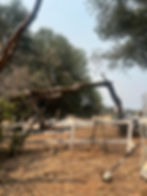
Interior Live Oaks remain green year-round but can still experience sudden limb
failure, particularly where multiple stems create weak branch unions.
Coast Live Oak
Although less common in higher elevations, Coast Live Oaks throughout western portions of El Dorado County also benefit from routine inspections.
Other Trees
While oaks receive the most attention, other species occasionally experience limb failures, including:
Douglas Fir
Ponderosa Pine
Cedar
Maple
Sycamore
Walnut
Eucalyptus
Each species presents unique structural characteristics that should be evaluated individually.
Signs Your Tree May Be at Greater Risk
No arborist can predict every branch failure. However, many trees exhibit warning signs that increase the likelihood of structural failure.
Watch for:
Large horizontal limbs extending over homes
Heavy end weight
Deadwood
Cracks in major branches
Cavities
Decay pockets
Mushroom growth near branch attachments
Included bark
Splitting bark
Previous storm damage
Multiple competing trunks
Excessively dense canopies
If your tree exhibits several of these characteristics, a professional Tree Risk Assessment is recommended.
How Drought Affects Mature Oaks
California's repeated drought cycles have changed the way mature trees respond to environmental stress.
Even trees that appear healthy may have experienced years of water stress.
Drought can contribute to:
Reduced wood strength
Dead branch formation
Insect infestation
Disease susceptibility
Root decline
Increased limb weight imbalance
Many homeowners mistakenly assume a tree with green leaves is perfectly healthy.
Unfortunately, structural problems often develop long before visible symptoms appear.
Can Sudden Branch Drop Be Prevented?
No arborist can guarantee that a healthy tree will never lose a limb.
However, professional tree care can significantly reduce risk.
Proper maintenance may include:
End-weight reduction
Deadwood removal
Structural pruning
Selective canopy thinning
Cabling or bracing when appropriate
Regular Tree Risk Assessments
The goal is not to remove every large limb but to improve structural integrity while preserving the tree's natural form.
Why Proper Pruning Matters
Improper pruning is one of the leading causes of future tree problems.
Practices such as topping create weakly attached sprouts that become hazardous over time.
Instead, ISA Certified Arborists use pruning methods that follow ANSI A300 standards and modern arboricultural practices.
Proper pruning helps:
Reduce excessive limb weight
Improve branch structure
Remove defective limbs
Increase canopy balance
Improve wind movement
Promote healthier long-term growth
For mature oaks throughout El Dorado County, strategic pruning often provides greater long-term value than aggressive cutting.
Should You Remove the Tree?
Many homeowners assume that once a branch falls, the entire tree should be removed.
Fortunately, that's often unnecessary.
Removal may be appropriate if the tree has:
Extensive trunk decay
Root failure
Severe structural defects
Multiple hazardous limbs
Significant disease
Irreparable storm damage
However, many mature trees can remain healthy and safe following professional pruning and structural improvements.
A certified arborist can determine the most appropriate course of action.
What To Do Immediately After a Large Branch Falls
If a major limb has already fallen:
Keep people away from the area.
Watch for additional hanging branches.
Avoid walking beneath damaged limbs.
Document damage for insurance if necessary.
Do not attempt to cut suspended branches yourself.
Contact a qualified tree service for an inspection.
Many secondary failures occur shortly after the initial branch breaks.
Why Homeowners in El Dorado County Trust Newcomb Tree Experts
For generations, Newcomb Tree Experts, Inc. has helped property owners care for mature trees throughout the Sierra foothills.
Our experienced team understands the unique challenges facing native California trees, including drought stress, wildfire concerns, aging canopies, and Sudden Branch Drop.
Our services include:
Tree Risk Assessments
Deadwood Removal
Emergency Tree Removal
Hazard Tree Evaluation
Tree Preservation
We use modern climbing, rigging, and safety techniques to protect your home, landscape, and surrounding trees during every project.
Areas We Serve
We proudly provide professional tree services throughout:
Placerville
Cameron Park
Shingle Springs
Rescue
Diamond Springs
El Dorado
El Dorado Hills
Camino
Pollock Pines
Coloma
Lotus
Cool
Greenwood
Garden Valley
Somerset
Folsom
Granite Bay
Auburn
Sacramento County
Amador County
East Bay area locations (contact us for specific cities)
Whether you have a single Valley Oak near your home or several mature trees across a large property, we're here to help.
Frequently Asked Questions
Why did my healthy oak tree suddenly drop a branch?
Healthy-looking trees can still experience Sudden Branch Drop due to internal structural stresses, heavy limb weight, drought effects, or hidden defects that aren't visible from the ground.
Is Sudden Branch Drop common in El Dorado County?
Yes. Mature Valley Oaks, Blue Oaks, Black Oaks, and Interior Live Oaks throughout the Sierra foothills can experience limb failure during periods of prolonged summer heat.
Can a certified arborist tell if my tree is dangerous?
While no inspection can predict every failure, an ISA Certified Arborist can identify many structural defects and recommend pruning or other corrective actions to reduce risk.
Should I prune my oak tree after a branch falls?
Often, yes. However, pruning should be based on a professional evaluation of the tree's overall structure rather than simply removing broken wood.
Does drought increase the chance of limb failure?
Long-term drought stress may weaken trees over time, making structural problems more likely, especially in mature specimens.
How often should mature oak trees be inspected?
Most mature landscape oaks benefit from a professional inspection every three to five years, or sooner if they have large overhanging limbs, visible defects, or have recently experienced branch failure.
Schedule a Professional Tree Risk Assessment
A fallen branch is often the first visible sign that a tree needs professional attention. Whether you're concerned about a towering Valley Oak over your home in Placerville, a mature Blue Oak in Cameron Park, or a Black Oak on your Camino property, early evaluation can help reduce risk while preserving the beauty of your landscape.
At Newcomb Tree Experts, Inc., our ISA Certified Arborists provide knowledgeable, honest recommendations based on the health, structure, and long-term value of your trees. We focus on preserving healthy trees whenever possible while addressing hazards before they become emergencies.
If you've experienced Sudden Branch Drop—or simply want peace of mind before the next hot El Dorado County summer—contact Newcomb Tree Experts to schedule a Tree Risk Assessment. We're proud to help homeowners throughout El Dorado County maintain safer, healthier, and more resilient trees for years to come.